


Most people with a rupay credit card upi feature don’t use it.
Not because it’s complicated. Because they don’t know it exists.
Here’s what most Indian cardholders are missing: every time you pay ₹500 at a kirana store via PhonePe, you could be earning 1–2% back as credit card rewards — instead of zero. Over a year of UPI spending, for most people, that’s ₹3,000–₹8,000 in rewards they’re leaving on the table.
The catch? You need a RuPay credit card linked to UPI. Visa and Mastercard credit cards cannot be linked to UPI — only RuPay can.
If you already have a rupay credit card upi-eligible card (and many people do without knowing), linking it takes about 90 seconds. This article covers why this feature exists, exactly how to do it without hitting the four common traps, and when it actually earns you money versus when it’s just moving transactions around.
Start with why this trick even works.

Image created via ChatGpt
Why RuPay Credit Card UPI Integration Exists
In June 2022, RBI announced that credit cards could be linked to UPI for the first time.
Until then, UPI was strictly a debit-to-debit system. You paid from your bank account, merchants received into their bank account. Credit cards lived in a parallel universe — you swiped them at stores, they generated statements, you paid at month-end.
The 2022 decision was specifically for RuPay. Not Visa. Not Mastercard. This wasn’t a tech limitation — it was a policy choice. RuPay is NPCI’s domestic card network, and connecting it to UPI gave NPCI a way to push RuPay adoption against the dominant Visa/Mastercard duopoly.
The result: if you have a RuPay credit card, you can now pay at any UPI-accepting merchant and have it show up as a credit card transaction — complete with rewards, statement cycle, and interest-free credit period.
Visa and Mastercard cardholders can’t do this. Only RuPay. If you want credit card rewards on your UPI spending, you need at least one RuPay card in your wallet.
This is the quiet reason banks like HDFC, ICICI, SBI, and IDFC First have aggressively started pushing RuPay variants of their popular cards in the last two years. They’re not being patriotic. They’re capturing UPI transaction volume that would otherwise bypass their cards entirely.
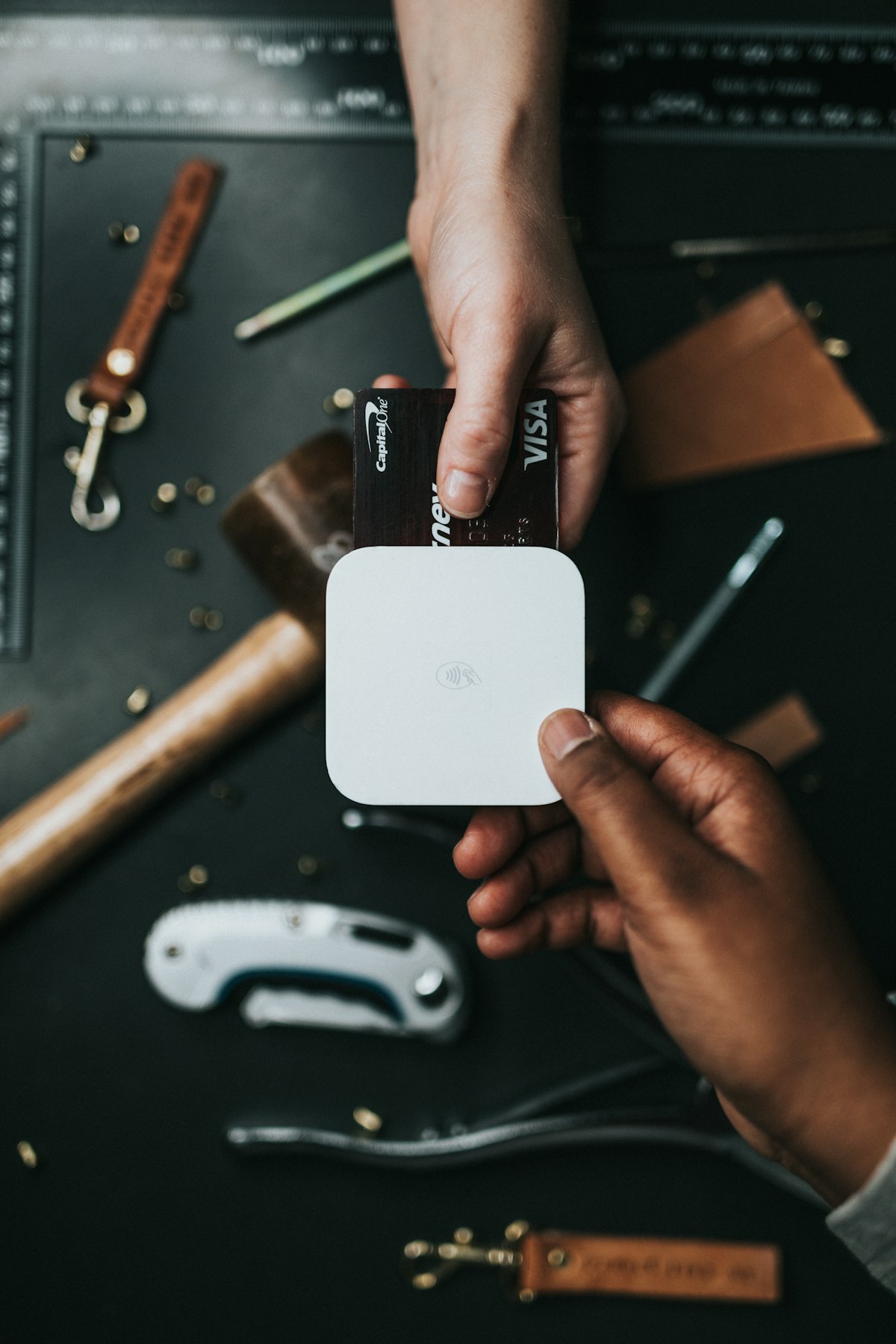
The 90-Second Setup (Any UPI App)
The linking process is the same across PhonePe, Google Pay, Paytm, BHIM, and the bank apps. Minor interface differences, identical core flow.
Open your UPI app. Go to payment methods or payment profile. Look for “Add credit card” or “Credit card on UPI” — it’s usually under the bank accounts section, sometimes in a separate tab.
The app will ask which card network. Select RuPay. Then pick your bank from the list.
Enter the last 6 digits of your RuPay credit card number. Your app pulls the full card via the bank’s API — you never type the full number. OTP verification follows on your registered mobile.
Set a 6-digit UPI PIN specifically for this card. This is separate from your debit card UPI PIN. Don’t reuse the same PIN — if you lose your phone, having different PINs limits the damage.
That’s the entire setup. From start to first successful payment, about 90 seconds.
On PhonePe, the path is Profile → Payment methods → Credit/Debit cards → Add new card. On Google Pay, it’s Profile → Payment methods → Add payment method → Credit card. On Paytm, it’s under Payment Settings → Saved Cards → Add New.
Merchants see no difference. You scan a QR, enter amount, authenticate with your credit card UPI PIN, payment goes through. Your credit card statement will show it the next day.
The Four Traps That Break the Experience
The setup works. The usage doesn’t always. Here are the four specific things that go wrong, in order of how often they trip people up.
Trap 1: MDR rejections at small merchants. UPI payments via debit accounts are Merchant Discount Rate (MDR) free — zero fees to the merchant. UPI via credit card is not. Merchants pay 1–2% MDR on credit card UPI transactions.
Below ₹2,000, most credit card UPI payments are MDR-free for the merchant. Above ₹2,000, MDR kicks in. Small merchants sometimes decline the payment at the QR-scanning stage — their system is configured to reject credit card UPI to avoid the fee.
You’ll see this at small kirana stores and chai stalls. Your payment fails not because of your card but because the merchant’s POS set-up doesn’t accept credit card UPI above a threshold.
Fix: ask before paying for anything above ₹2,000. Or keep your debit account linked as a fallback.
Trap 2: Rewards not credited for certain categories. Banks often exclude specific spend categories from rewards when paid via UPI. Utility payments, rent payments, government payments, and fuel are the common exclusions.
HDFC excludes fuel and rent from rewards on RuPay UPI. ICICI excludes utility bills. SBI’s exclusion list is the longest — utility, fuel, rent, government, insurance premiums. Different bank, different exclusions.
You’ll still earn rewards on grocery, dining, shopping, travel — the categories banks want you using credit for. But the “use it for everything” approach silently dilutes your reward rate.
Check your specific card’s terms on the bank website before assuming every UPI spend earns points.
Trap 3: Cashback cards vs reward-point cards behave differently. Cashback cards (HDFC Millennia, Amazon Pay ICICI, Flipkart Axis) give direct percentage back. On UPI spending, most still apply the cashback rate.
Reward-point cards (HDFC Infinia, SBI Elite, Axis Magnus) give points per rupee spent. On UPI transactions, most banks apply a lower earning rate than swipe transactions. A card earning 5X points on dining swipes might earn only 1X on dining paid via UPI.
Effectively, UPI payments earn 40–60% of the swipe reward rate on premium cards. Still something — but less than the headline rate suggests.
Trap 4: Transaction limits stack weirdly. Your credit card has a limit (say ₹3 lakh). Your UPI has a daily limit (usually ₹1 lakh per day). Your credit card UPI has its own limit (often ₹1 lakh per transaction, ₹5 lakh per month, varies by bank).
The binding constraint is whichever limit you hit first. For most people it’s the UPI daily limit, not the credit card limit. A ₹1.5 lakh laptop purchase via RuPay credit card UPI may fail because the UPI daily limit is ₹1 lakh.
Fix: for large purchases, use the credit card directly via the merchant’s checkout flow (not UPI QR). The card limit is what applies.

When RuPay Credit Card UPI Actually Saves You Money
Let’s do the honest math.
Assume you spend ₹8,000 a month on UPI across various merchants — groceries, food delivery, small shopping, occasional transport. Over a year, that’s ₹96,000 in UPI spending currently going through your debit account, earning nothing.
Move the same spending to a RuPay credit card UPI:
| Card Type | Effective UPI Reward Rate | Yearly Rewards on ₹96K |
|---|---|---|
| Cashback (HDFC Millennia RuPay) | 1–2.5% | ₹960–₹2,400 |
| Premium points (HDFC Infinia RuPay) | ~1.3% | ~₹1,250 |
| Specialist (Amazon Pay ICICI RuPay) | 1% base, 5% on Amazon | ₹1,000–₹3,500 depending on Amazon share |
| IDFC FIRST Millennia RuPay | 2.5% on UPI | ~₹2,400 |
For most middle-class Indian households, that’s ₹1,500–₹3,000 a year in found money. Not life-changing. But it’s money for doing something you were already doing.
The real value is hidden elsewhere. You also get 20–50 days of free credit on every UPI transaction (until your next statement cycle ends). If you’re disciplined enough to pay the full bill, you’ve moved ₹8,000/month of your spending to “buy now, pay 30 days later” without paying a paisa in interest.
The combination — rewards on everyday spending plus interest-free credit period on UPI transactions — is why rupay credit card upi is quietly one of the most financially sensible setups for anyone with a decent credit score. It’s just not marketed as such.
When It’s Not Worth Bothering
This isn’t for everyone. Three cases where the juice isn’t worth the squeeze.
If your UPI spending is mostly rent, utilities, and fuel — the excluded categories — the effective reward rate drops near zero. You’re doing setup work for no return.
If you have a habit of carrying a balance on your credit card, adding UPI convenience is actively dangerous. The interest-free period only works if you pay the full statement. Otherwise, you’re earning 2% rewards while paying 36–42% interest on the balance. That math is catastrophic.
If your credit score isn’t ready for a RuPay credit card yet, the sequence matters. Build your score first — the path is to improve your CIBIL score to 750+, then apply for a card. Applying before you’re ready creates hard inquiries that hurt your score further.
The Best Cards for This Specifically
Not all RuPay credit cards are created equal for UPI usage. A few stand out.
IDFC FIRST Millennia RuPay — 2.5% reward rate on UPI spends, no annual fee. For pure UPI-heavy usage, this is hard to beat.
HDFC Millennia RuPay — 1% base, 5% on Amazon/Flipkart/Swiggy (even via UPI in most cases). Strong if your online spending is concentrated on these platforms.
Amazon Pay ICICI RuPay — 5% on Amazon (including via UPI), 2% on other partner merchants, 1% elsewhere. Among the cleanest lifetime-free options, discussed in detail in our best lifetime free credit cards for 2026 piece.
For premium users, the Infinia vs SBI Elite comparison applies — but note that Infinia’s RuPay variant earns at the standard rate minus the UPI dilution, not the full swipe rate.
For the official policy framework, you can read the RBI’s credit-on-UPI notifications.
What’s Coming Next for RuPay Credit Card UPI
Two things worth knowing about where this is heading.
The MDR issue will likely get a clean fix in the next 12 months. NPCI has been in discussions with the government to standardize credit card UPI MDR at a lower rate — around 1% — which should eliminate most merchant rejections.
International RuPay acceptance is expanding. RuPay cards already work in UAE, Singapore, Bhutan, Nepal, and parts of France. UPI international is growing alongside. At some point in the next few years, “RuPay credit card UPI” becomes a viable payment method in multiple countries for Indian travellers.
For now, though, the benefit is domestic and the setup is sitting there unused in most people’s wallets.
Open your UPI app tonight. Check if there’s a “credit card” option in payment methods. If you have a RuPay credit card in your wallet, link it.
Ninety seconds from now, every UPI payment you make will start earning rewards.
Disclaimer: RuPay credit card UPI features, MDR structures, reward rates, category exclusions, and transaction limits are based on publicly available information as of April 2026 and may change based on RBI directives, NPCI policy updates, or individual bank decisions. Reward rates and category exclusions vary by specific card product — always verify current terms on your bank’s official website before relying on expected rewards. This content is for informational purposes only and should not be considered financial advice. Consult a qualified advisor for personalised guidance.